






National Estate of Chambord

http://www.chambord.org/

Prepare your visit

I will be at Chambord on
 Tell me more...

Materials and guilds

Half-day or full-day workshop
Level: Ages 7-15
Times: 9.30am/12pm and/or 1.30pm/4pm
Price: €110 or €200

Using all their five senses, pupils explore the monument to discover the various materials employed in its construction, how they were used, where they came from, and the different building trades to which they are linked.
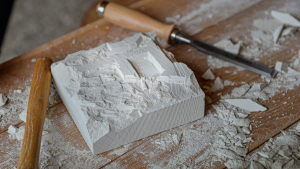
In the full-day version, they are then introduced to the basics of tufa sculpture, under the eye of a professional stone dresser.


Matériaux compagnons
Objectives:


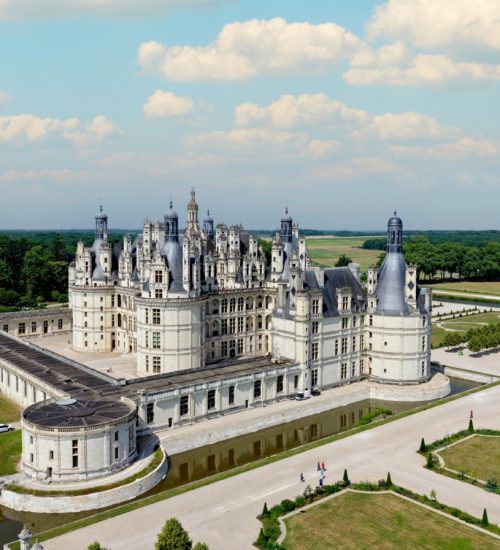
We know, of course, that François I was the man behind the creation of the Château of Chambord. But how exactly did they set about building châteaux in Renaissance days?
Recognising the various materials of which the château is composed and defining their characteristics. Understanding how important guilds were at the time the château was built. Developing powers of observation and knowledge of how stone is worked, in order to better understand how the monument was built and is preserved.


Programme:

Sequence 1: Hunting out materials
After defining what materials were employed to build Chambord, pupils wander the château in search of them. Using riddle and question-and-answer games, the workshop leader guides the children’s footsteps along the way.

Sequence 2 (classroom): Restitution of discoveries
As a group, pupils identify the materials they have collected and the parts of the château to which they belong, so putting the knowledge they have acquired into context, and then associate each material with one or more building trades.

(End of half-day workshop)

Sequence 3
(individual work): Sculpture & design
Like sculptors striving to live up to the curves of their models, pupils sharpen their observational powers and are introduced to the art of preparatory design through study of the château’s sculpture work. Such practical work also helps them understand the language of its sculptures – images from the reign of François I.

Sequence 4
(in class, individual work): Stone dressing
Pupils develop their creative powers and manual skills by trying their hand at dressing tufa stone. Supervised by a professional stone dresser, they are introduced to dressing and sculpting techniques, gaining awareness of how fragile stone can actually be.
 

Bibliographic resources:

For teachers:
Masons and Sculptors (Medieval Craftsmen series), COLDSTREAM Nicola, University of Toronto Press, 1991
Chambord, le passé revisité, TREZIN Christian, Editions Actéon, 1993 (out of print)
Chambord, DE GOURCUFF Isabelle, Editions du Patrimoine / Arts-lys, 2001
Bâtisseurs de châteaux et de cathédrales, RV 112 / CNDP, Radiovision, Ministry for National Education

For pupils (in class):
The Renaissance (See through History), WOOD Tim, Viking Juvenile, 1993.
Construire un château fort aujourd'hui, l'aventure de Guédelon, BAUD Anne, REVEYRON Nicolas, Editions du Sorbier, 2000. (techniques of fortress construction, building trades, and many illustrations)
 
Internet resources:

http://genhames.free.fr/comphisto.htm (history of the guilds)
http://www.guedelon.fr/en/the-construction_03.html (building materials and techniques)

Idea for a class activity:

Pupils collect 5 different materials from their homes, then, in class, compare and rank what they have brought in, associating their materials with different sorts of buildings (their homes or their school, for example). Some materials, of course, are specific to a historical period or to a region. They can then define the characteristics of their materials (solid therefore able to bear heavy loads, soft therefore good for sculpting, etc.).
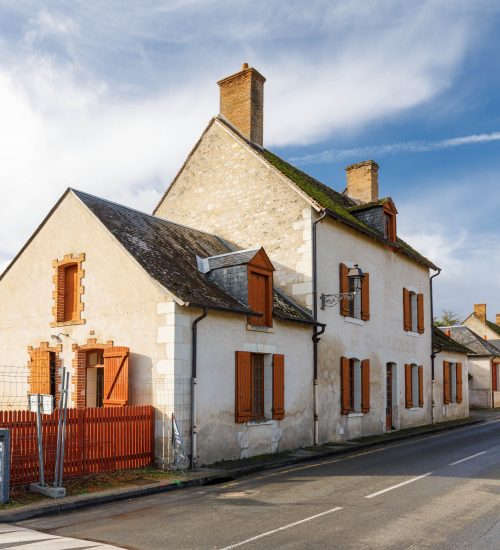
You might extend the activity by observation work in your town or village, defining what building materials are used in your area. Such work can also lead to studying the manufacture and/or mining of building materials.

NB: Such work on building materials can also be an interdisciplinary activity. Clay is impermeable and highly malleable, and could become the medium of choice in a plastic arts creative project (e.g. fashioning a clay sculpture on which pupils can inlay other materials they have found – a sort of composite creation). The assemblage technique makes pupils aware of how many different materials can be used in the plastic arts.

The activity can be done in two stages. The suggested observation of your town can be carried out after your visit to Chambord, so heightening your pupils’ awareness of possible signs of wear on the walls of old buildings.

Booking: reservations@epchambord.fr