





National Estate of Chambord

http://www.chambord.org/

Prepare your visit

I will be at Chambord on
 Tell me more...

History and architecture of Chambord

Château de Chambord NB

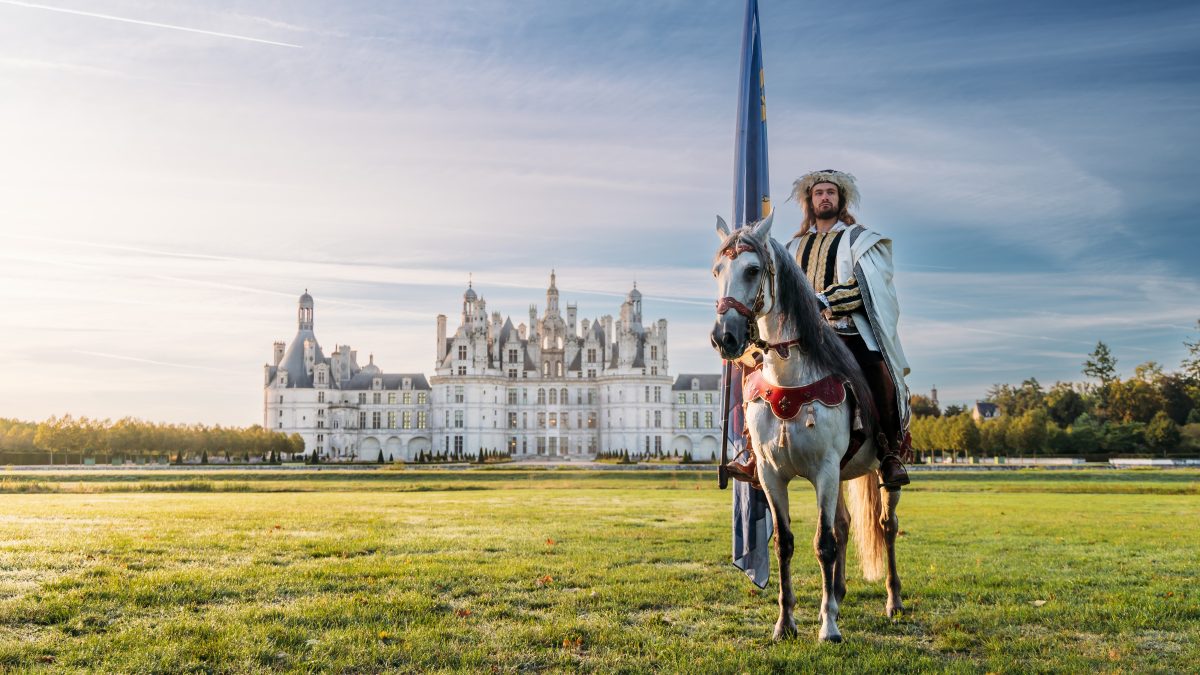
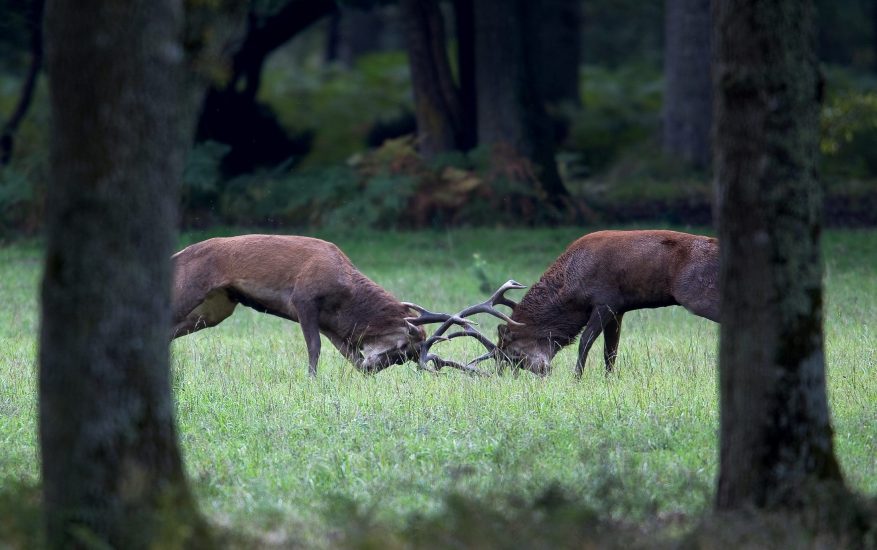
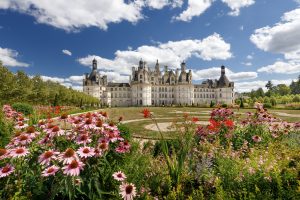
To understand Chambord, you have to appreciate the elation and extravagance of François I who, at the tender age of twenty-five, wanted to show the world in spectacular fashion what his two favourite pastimes were: hunting and architecture. To witness the full extent of this, take your time to explore a unique monument built at the turn of the Renaissance period. Start by crossing a 32km long wall, enter a dense forest teeming with game and stumble across an architectural gem at its heart, still intact. Then let its sheer immensity, way beyond any human scale, leave you speechless, and marvel at this alchemy of shapes and structures where nothing has been left to chance. Chambord is so much more than a castle: it is an exceptional piece of architecture, a technical feat, a stone colossus… quite simply the dream of the young King François come true.

Cheminees The geometric clarity of the way Chambord has been laid out, the harmony of its proportions and fantasy of its rooves bristling with turrets, chimneys and breathtakingly high skylights will all leave you in awe in their own distinct way. The shadow of Leonardo da Vinci, the official "architecteur", who died a few months before the construction work began in 1519, hovers over the astonishing double spiral staircase. François I, commissioner and great huntsman, only stayed at the Château for a few weeks to hunt in the surrounding woods, leaving it devoid of furniture and inhabitants after each visit and, in the end, unfinished.

François I’s immediate successors hardly ever came to Chambord. While Henri II continued the construction of the Chapel wing, Charles IX only hunted there on rare occasions and it was Gaston d’Orléans who brought the place somewhat back to life. Exiled twice to the county of Blois by his brother Louis XIII, he often spent time at Chambord between 1634 and 1660 and undertook the first stage of conversion and restoration work with the installation of his apartments in the Royal Wing. The Château was not properly finished until the reign of Louis XIV, who liked this prestigious site so much that he stayed there eight times, going hunting and holding ballets and plays, such as by Molière and Lully, like Monsieur de Pourceaugnac or the Bourgeois Gentleman, which premiered at the Château in 1670. Coming with his court from 1668, the King had the Chapel Wing finished, converted part of the first floor of the keep into a royal suite, abandoning the original layout and had the lower rectangular enclosure raised by one floor to accommodate more people. External developments were also drafted, stables and gardens, but none of these were completed.

The 18th century was, for Chambord, the period in which its residents spent the most time there. The Château turned into a prestigious royal "gift" at this time. Stanislas Leszczynski, Louis XV’s father-in-law, expected a refuge from the latter following the exile to which his country had banished him, and it was in this context that he lived at Chambord for eight years. His stay was marked by the permanent furnishing of the Château thanks to deliveries from the Versailles storehouse. In 1748 Maurice of Saxony became Chambord’s new resident, for two years. As a reward for the military victories he had won for France, he was promoted to Marshal and, in 1748, earned the title of Governor for Life of Château of Chambord from King Louis XV. New furniture from the royal storehouses graced the Château, setting the scene for a glittering life at court in which plays and hunting featured prominently. With permanent residents in the Château, the incomplete stables were converted by Jules-Hardouin Mansart to house a royal stud-farm. The death of the Marshal of Saxony in 1750 brought his nephew, the Count of Friesen, to Chambord, where he spent five years.
The Marquess of Polignac moved in permanently as Governor in 1784, keeping the Château furnished and adding new developments should King Louis XVI ever come to stay. During the Revolution, prevarications over the fate of Chambord meant that in turn it became a fodder warehouse, powder manufacturing workshop, prison and headquarters of the 15th cohort of the Legion of Honour.
After the victory of Wagram in 1809, Napoleon gave Chambord to Marshal Berthier, who only spent two days there. When the latter’s widow was granted Louis XVIII’s permission to put it up for sale, a subscription was organised to buy Chambord and return it to the heir of the Crown. This was the Duke of Bordeaux, Charles X’s grandson, and it was therefore he who, in 1820, became the Château’s new owner, at less than a year old!

Lanterne Forced into exile for a long time, he did not see his property until 1871, when he stayed there briefly and wrote the famous manifesto spelling out the reasons prompting him to refuse the crown. Despite this exile, he undertook some restoration work that his nephews, the Bourbon-Parmes, continued ardently from 1881 to 1892, repairing the keep lantern in particular.
In State hands since 1932, Chambord is carrying on its restoration work without let-up
.