





Chambord’s Hunting and Nature Museum
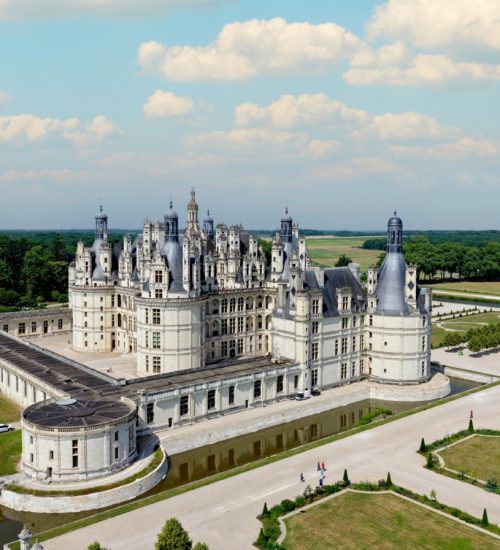
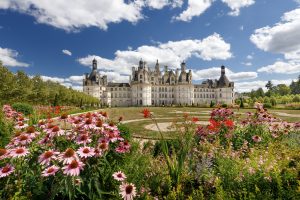
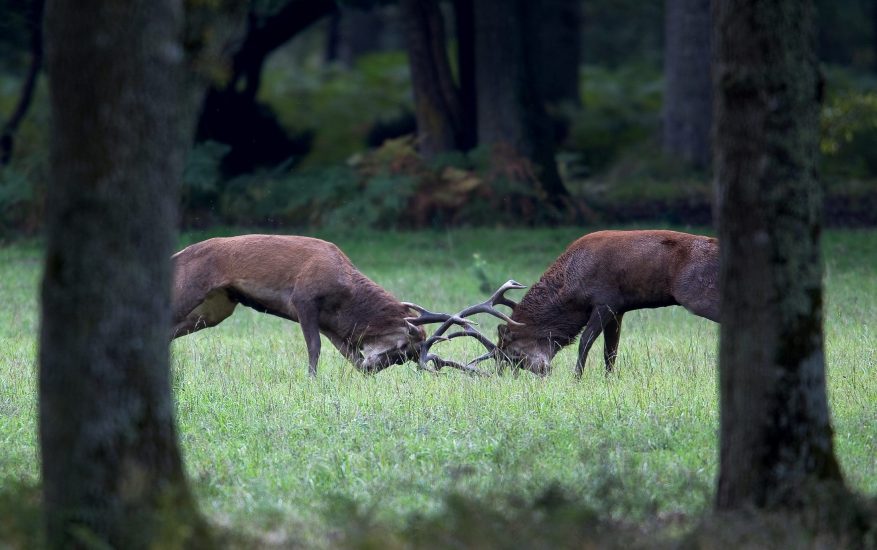
His love of hunting was one of the reasons that led François I to erect a magnificent château in the forests bordering Val de Loire and the game-rich region of Sologne. The keep’s terraces served as observatories from which the movements of huntsmen and pack could be scrutinised. After François I, the tradition was kept up by many of Chambord’s most illustrious occupants, including Louis XIV, Stanislas Leczinski and Marshal de Saxe.
A hunting and nature museum has been accommodated on the second floor of the château since 1971, devoted to highlighting the relationship that mankind maintains with the wildlife around him. It was President Georges Pompidou who wanted the State-owned estate to become a centre for the cynegetic arts, and he achieved this by calling upon the help of the industrialist and patron François Sommer – who had founded the Maison de la Chasse et de la Nature to which the Paris museum of the same name is attached – in repopulating the château’s grounds and bringing its interior back to life.
The museum is complemented by a trophy gallery, and good use has also been made of the Salle de Soleils on the ground floor of the keep, where your visit will most probably start and where a part of the cynegetic decor ordered by the Duke of Orleans for the Château des Tuileries dining room, along with a collection of stuffed animals from the Solognote Forest, awaits your coming.


Since 2005, Chambord’s Hunting and Nature Museum has had two major focuses:
- The château as hunting lodge. The various forms of hunting practised in Renaissance times are evoked through artefacts from the period and tapestries with hunting themes, such as the magnificent late 17th century silk and wool tapestries known as the Chasses de Maximilien, woven at Gobelins for Louis-Alexandre de Bourbon, Count of Toulouse (1678-1737) by Dominique de la Croix, as is evidenced by the initials on their borders. They were still adorning the walls of Château d’Anet on the eve of the Revolution, and were gifted to the town of Chartres in 1815 by the Duchess of Orleans.
The first panel of the Chasses de Maximilien was woven around 1530, drawing its inspiration from the Livre de la Chasse de Gaston Phoebus. The scenes depicted take place in the surroundings of Brussels, and as one of the characters in them was thought to be Maximilian I or his grandson Charles V, the hangings were given their name in the 17th century. The tapestry, which is now on exhibition at the Musée du Louvre, is made up of twelve panels, each representing a month of the year.
- The forest through the eyes of contemporary artists. A theme illustrated by such contemporary installations as Mark Dion’s Salon de Chasse and Chambre des Chasseurs.
For several years, Dion has been trying to deconstruct the visual and ideological codes that have shaped our knowledge and experience of nature over the course of our history. To this end, he makes a study of natural history museums and taxidermy in order to create links between real and imagined history. The “Salon de Chasse” is made up of an ensemble of components evoking a fictional world glorifying cynegetic art – the artist presents a multitude of stag’s heads interspersed with felt banners created for the occasion. At the end of the room is a “viewing area” comprising a luxuriously decorated private lounge modelled on the estate’s observatories, and suggesting a point of view on the exhibition and on the ceremonies that govern hunting ritual.
The “Chambre des Chasseurs” comprises a group of display cabinets containing framed photographs from various private collections from the 20th century to the present day. These images of hunters posing in front of their trophies are so many testimonies to rituals still observed today.
Musée de la chasse et de la nature de Paris :
62, rue des Archives – 75003 Paris
Tel.: +33 (0)1.53.01.92.40 - musee@chassenature.org
www.chassenature.org